Trade show tips: a practical guide for exhibitors
Trade show tips from the people who build the stands: what to do before, during and after a fair. Use them as a checklist for your next show.
Start with one clear objective
Every decision on a stand gets easier once the objective is clear. Are you launching a product, meeting existing customers, recruiting distributors or generating new leads? Choose one primary goal and no more than two secondary ones.
Then turn it into a number your team can track at the show: meetings held, qualified leads, demonstrations given. A stand designed for twenty scheduled meetings looks very different from one built for walk-in demonstrations.
Work backwards from opening day
- Plot confirmed. Read the exhibitor manual, note every deadline and brief your stand builder.
- Design. Agree the concept, review the 3D views and lock the layout.
- Approvals. Submit stand plans and any structural documents before the organiser’s deadline.
- Orders. Book power, water, internet, hanging points and cleaning within the standard price period.
- Production. Deliver final artwork on time. Graphics are often the last item produced and the first to run late.
- Logistics. Confirm shipments, access passes and accommodation.
- Final weeks. Brief the team, confirm meetings and prepare the lead process.
Read the exhibitor manual early
The exhibitor manual is the most underrated document of any fair. It sets the rules for heights, open sides, double-deck structures, materials, rigging and electrics, and it lists the deadlines that drive your whole plan. Look for:
- the deadline for submitting stand plans for approval;
- the deadlines for ordering power, water, internet and hanging points, as late orders often cost more;
- badge, catalogue and lead-retrieval registration;
- build-up and dismantling timetables, including vehicle access rules.
Share the manual and your plot plan with your stand builder from the very first conversation.
Brief your stand builder properly
A complete brief saves weeks of back-and-forth. Include:
- the fair, your stand number, the plot dimensions and the open sides;
- your objectives and key messages;
- what visitors should do on the stand;
- the products you will display, with sizes, weights and power needs;
- the spaces you need: meeting rooms, storage, bar, demonstration areas;
- your brand guidelines;
- a budget range, and who approves what.
A budget range is not a trap. It lets the designer propose the right scope instead of guessing. Our design process starts from exactly this information, as does every project we run as an exhibition stand builder in Spain.
Budget for the whole picture
The stand itself is only part of the cost of a fair. A realistic budget also covers:
- space rental and any surcharge for extra open sides;
- services: power, water, internet, hanging points, cleaning and security;
- graphics, furniture, AV equipment and catering;
- transport, storage and insurance;
- travel, accommodation and staff time;
- promotion before the show and lead capture during it.
Listing every item early avoids a classic mistake: a stand designed with the whole budget and nothing left for the rest. Our exhibition stand FAQ explains what drives the cost of the stand itself.
Design for the view from the aisle
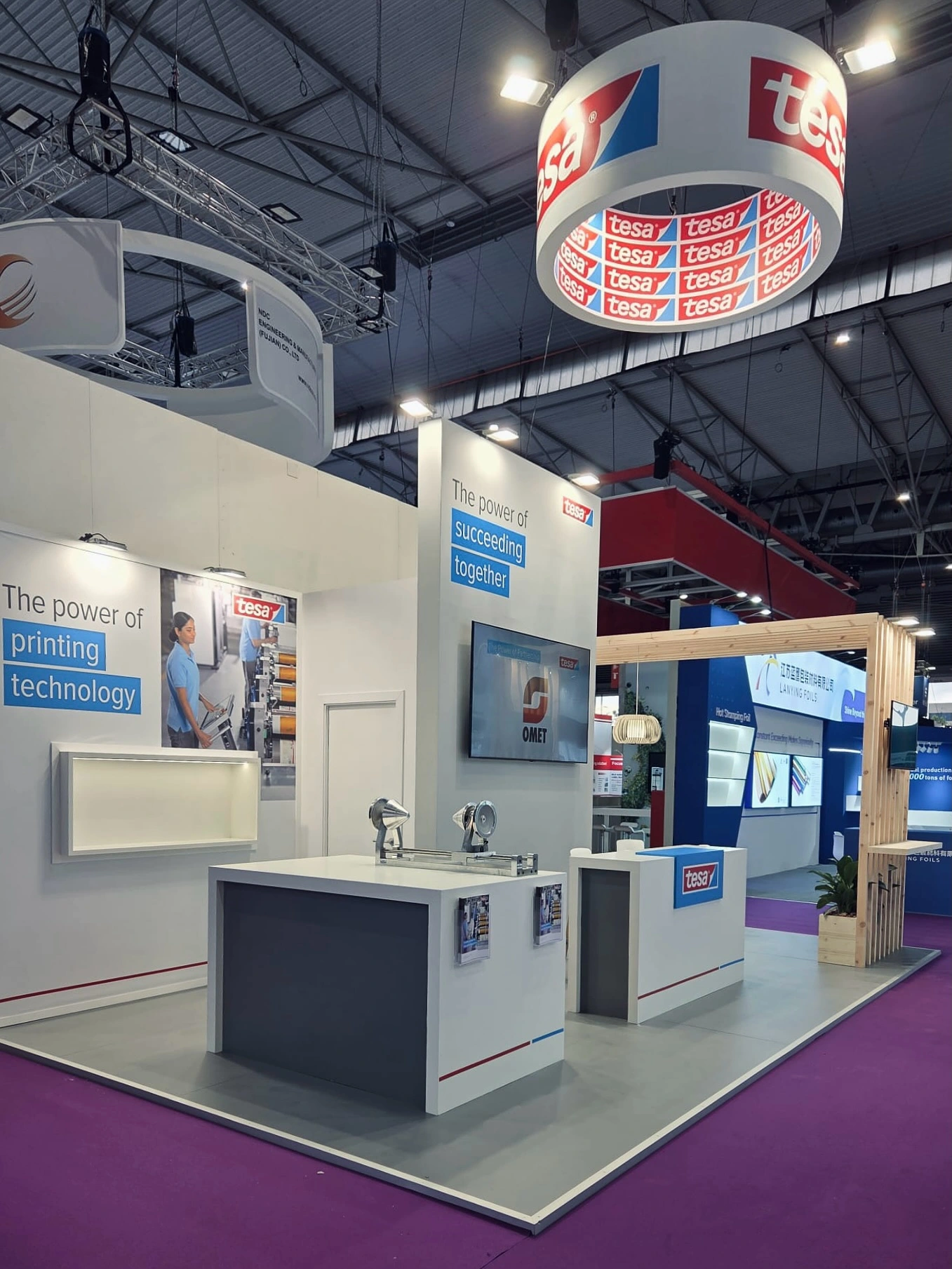
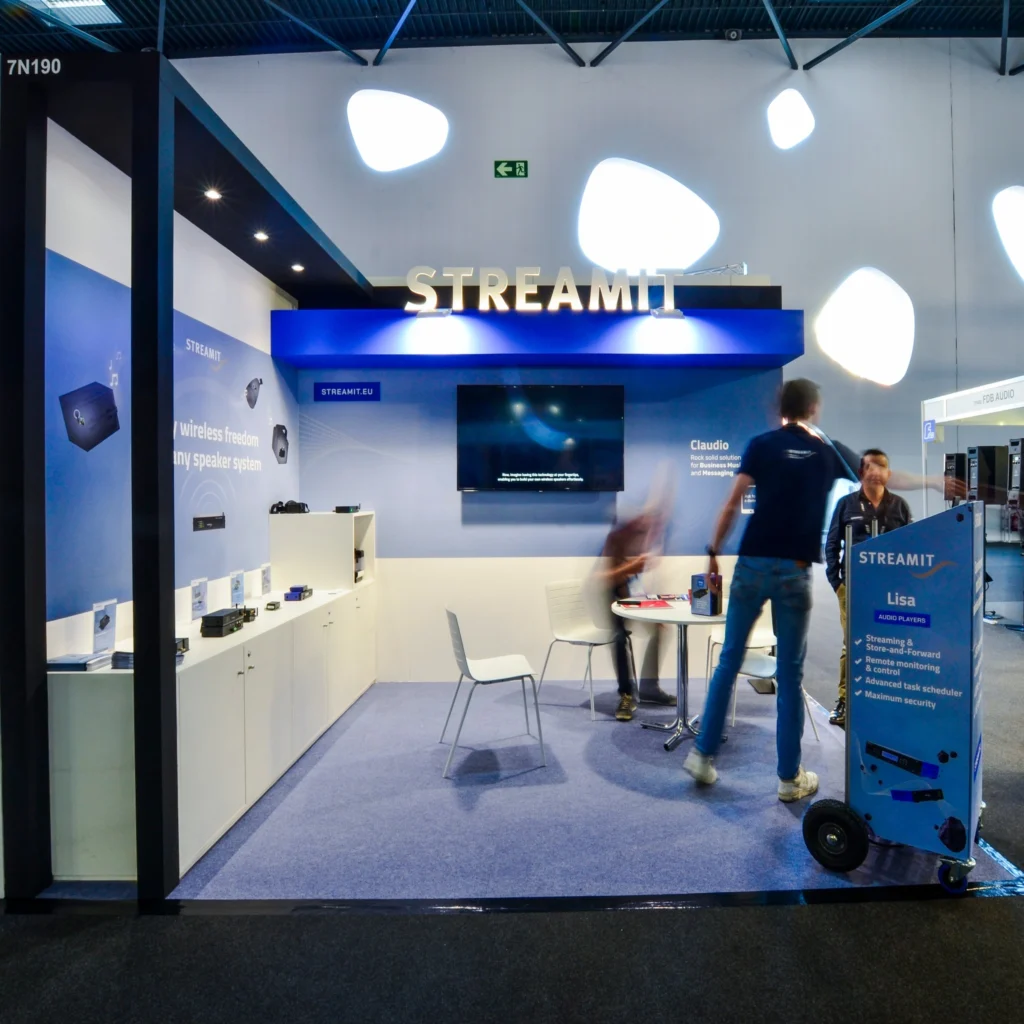
Visitors decide in seconds whether to step in. Design the stand from the aisle first.
- One message, readable from a distance. Detail belongs at eye level, closer in.
- Open entry points. Avoid long counters across the front.
- Light the product, the graphics and the faces of your team.
- Place demonstrations where passers-by can watch without committing to a conversation.
- Keep storage and staff areas out of sight but close at hand.
The format of your plot changes all of this. Our guide to stand formats explains how.
Plan logistics like a project
- Agree delivery windows for products and materials, and check when the venue accepts deliveries.
- If you ship goods from outside the EU, ask your forwarder about temporary admission, for example under an ATA Carnet.
- Book hotels early. Around major fairs, rooms near the venue go fast and prices rise.
- Decide who on your team receives the stand at handover, and when.
- Prepare a small kit: chargers, adaptors, tape, cleaning cloths and spare literature.
- Check the venue’s own build-up rules: our pages on stand building in Barcelona, IFEMA MADRID and Feria Valencia set them out.
Promote before the show
The best visitors are the ones who planned to see you. In the weeks before the fair, invite customers and prospects by email and offer a meeting slot rather than a vague “come and see us”. Complete your listing in the exhibitor catalogue and the fair’s app, and use any matchmaking tools the organiser provides.
Give people a reason to come: a launch, a demonstration, a talk or simply a set time with the right person.
Prepare your team
A stand is only as good as the people on it.
- Brief everyone on objectives, key messages and the lead process before opening day.
- Plan shifts so staff stay fresh. Tired teams lose leads.
- Cover the languages of the fair. At international shows in Spain, that means at least English and Spanish.
- Agree simple stand rules: no eating on the stand, phones away, meetings in the meeting area.
- Name one person responsible for the stand each day: stock, tidiness and issues.
Capture leads you can use
Decide how you will capture leads before the show, not on the first morning. Many organisers offer badge-scanning apps, and a short structured form works too.
What matters is the information: who the visitor is, what they need, how urgent it is and the next step you agreed. A handful of qualified contacts with clear next steps is worth more than a pile of business cards.
Trade show tips for the show days
- Hold a short briefing every morning and a debrief every evening.
- Track your objective daily and adjust. If meetings slip, change the approach.
- Keep the stand tidy: clear counters, restocked literature, a clean floor.
- Walk the show. Competitors’ stands and visitors’ questions are free market research.
After the show
The fair is not over until the follow-up is done.
- Send follow-ups within days, while conversations are fresh.
- Enter every lead in your CRM with notes and the agreed next step.
- Measure results against your objective, including the cost per meeting or per qualified lead.
- Debrief with your stand builder: what worked, what did not, what to keep.
- If the stand was designed for reuse, plan its storage and the next show now.
Where we build
Exhibiting in Spain? We build at these venues
Stand builder in Barcelona
Fira Barcelona and the CCIB.
Stand builder in Madrid
IFEMA MADRID.
Stand builder in Valencia
Feria Valencia.
Stand builder in Bilbao
BEC Bilbao Exhibition Centre.
Stand builder in Málaga
FYCMA Málaga.
Stand builder in Seville
FIBES Sevilla.
Planning your next fair?
Share your plot plan and objectives. We will turn them into a stand that works for your team.