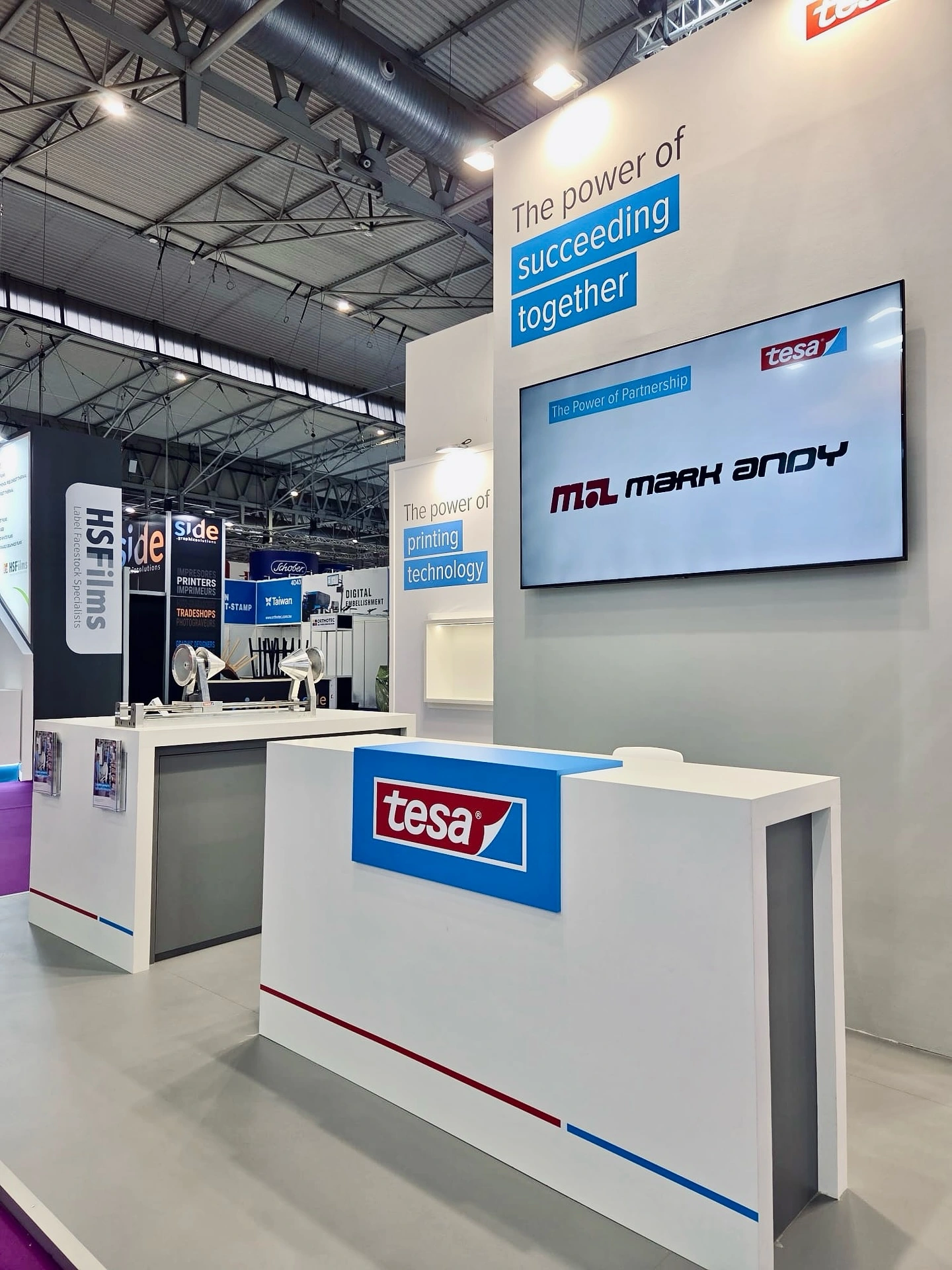
Exhibition stand formats explained
Inline, corner, peninsula, island or double-deck: exhibition stand formats shape the design, the visitor flow and the budget. Here is how each one works.
Why the format comes first
When you book space at a fair, you book more than square metres. You book a position in the hall and a number of open sides. That number decides how visitors reach you, how much of the stand they see and how many surfaces must be designed and finished.
Formats are regulated, and sometimes priced, differently. Some are only offered above a certain size. Check what the fair offers before you set your design ambitions.
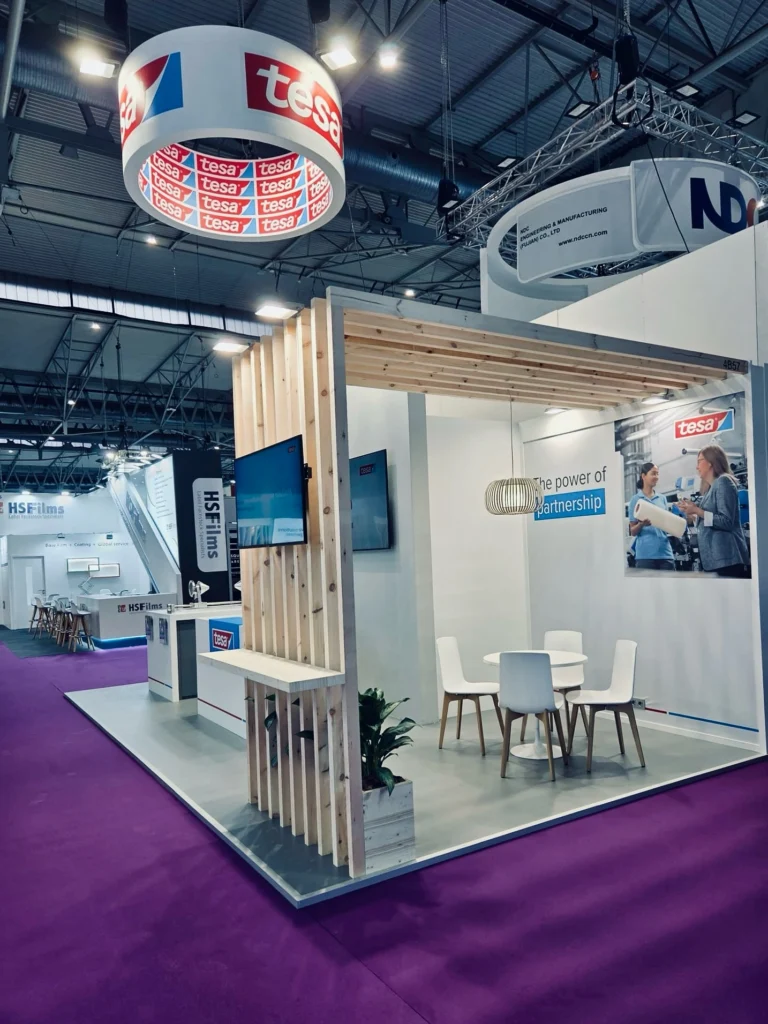
Space only or shell scheme?
Formats describe the open sides of a plot. A separate choice is whether you book space only or a shell scheme package.
A shell scheme stand comes with basic walls, a fascia and lighting supplied through the organiser. A custom stand needs a space-only plot, on which your builder constructs everything from the floor up. Everything below applies to space-only plots.
Inline stand: one open side
An inline stand, also called a row stand, sits between two neighbours with a wall behind it. Visitors see it only from the aisle in front.
Design priorities: a strong back wall that carries the main message, an open front that invites people in, and storage built into the rear or one side. Side walls are often limited in height where they meet neighbours, and many fairs require any wall visible from a neighbouring stand to be neatly finished.
Best for: smaller budgets, focused messages and first-time exhibitors.
Corner stand: two open sides
A corner stand sits at the end of a row and opens onto two aisles. It catches traffic from both directions and offers more visibility than an inline stand of the same size.
Design priorities: treat the corner as the main entrance, keep both frontages active, and use the two closed sides for storage, graphics and a meeting area.
Best for: exhibitors who want more visibility without the full cost of an island.
Peninsula stand: three open sides
A peninsula stand is open on three sides and backs onto another stand or a wall. It often sits at the head of a row, facing a main aisle.
Design priorities: the rear wall becomes a large brand surface that can be seen from a distance, the three open sides need clear circulation, and storage and meeting rooms tuck against the back.
Best for: medium and large stands that need a strong presence and some closed space.
Island stand: four open sides
An island stand has aisles on all four sides. It offers the most visibility and the most freedom. It also demands the most design work, because there is no back wall to hide things behind.
Design priorities: a landmark visible across the hall, such as a suspended banner or a tall structure where the rules allow; balanced access from every side; storage and meeting rooms placed at the core so they do not block views. Some fairs limit how much of each side may be closed.
Best for: larger stands, product launches and brands that want to be a destination on the show floor. Our page on custom exhibition stands shows how we build them.
Double-deck stand: two storeys
A double-deck stand adds an upper floor, usually on an island or peninsula plot. The ground floor stays open for visitors and demonstrations. The upper level holds meeting rooms, hospitality or a quiet office with a view across the hall.
Double-deck stands are small buildings. They need structural calculations, a project signed by a qualified technician, the organiser’s approval, safe stairs and balustrades, and more build-up time. Not every hall or fair allows them, and the upper floor is often limited to part of the plot.
Best for: exhibitors with a heavy meeting programme and limited floor space, when the fair’s rules and the budget allow.
Rules that often shape the design
Each fair sets its own technical rules, but some themes come up again and again. Check them for your format before design starts:
- maximum build heights, sometimes lower along the boundaries with neighbours;
- how walls facing other stands must be finished;
- how much of each open side may be closed with walls or storage;
- conditions for suspended elements and hanging points;
- requirements for upper floors, from structural documents to occupancy limits;
- the plot boundary, which structures and overhead elements must not cross.
We read the manual with you and flag the rules that change the design.
How to choose between exhibition stand formats
Start from the objective
If your value comes from scheduled meetings, prioritise closed or semi-closed space. If it comes from walk-in visitors, prioritise open frontage.
Count the surfaces
Every open side adds design, finishes and graphics. An island usually costs more to build than an inline stand of the same area.
Check the rules early
Heights, open sides, double-deck conditions and deadlines are set by each organiser. Read them before you commit to a design.
Formats and reuse
If you exhibit at several fairs, your plots will rarely match. A modular structure with adaptable graphics can move from a corner at one show to a peninsula at the next.
Plan reuse at the design stage: dimensions, connections and graphic formats that fit several configurations. Our build and storage service takes care of the rest. Designing for reuse is standard practice for us as an exhibition stand builder in Spain.
Stand format questions
Is a corner stand always better than an inline stand?
Not always. It gives more visibility, but it needs two active frontages. For a small team, a well-designed inline stand can outperform an understaffed corner.
What is the difference between an island and a peninsula?
An island is open on all four sides. A peninsula is open on three, with one side against a neighbour or a wall.
Can we build a double-deck stand at any fair?
No. It depends on the hall, the fair’s rules and the size of the plot. We check feasibility before design starts.
Does the format change the price of the space?
Often, yes. Some organisers charge a premium for plots with more open sides. Check the fair’s price list when you book.
Which formats can we book at Fira Barcelona or IFEMA MADRID?
It depends on the fair rather than the venue: each organiser sets the plot types, minimum sizes and double-deck conditions in its exhibitor manual. Our pages on stand building in Barcelona and stand building in Madrid explain the local rules, and our exhibition stand FAQ covers budgets and lead times.
Where we build
Any format, at these venues
Stand builder in Barcelona
Fira Barcelona and the CCIB.
Stand builder in Madrid
IFEMA MADRID.
Stand builder in Valencia
Feria Valencia.
Stand builder in Bilbao
BEC Bilbao Exhibition Centre.
Stand builder in Málaga
FYCMA Málaga.
Stand builder in Seville
FIBES Sevilla.
Not sure which format fits?
Send us your plot plan and objectives. We will tell you what the format allows and how we would use it.